What a livestock mat actually has to do
A stall or walking-surface mat has four jobs: give cushioning that concrete cannot, grip the hoof in wet conditions, shed or hold liquids depending on the zone, and survive daily scraping and disinfectant. No single mat does all four equally well, which is why barns usually end up with two or three different mats in different zones.
Compound: SBR, EPDM or NBR
Most stall and walkway matting is SBR — it is the cost-effective workhorse with good abrasion resistance. EPDM earns its premium outdoors and in sunlight-exposed yards because it resists UV and ozone far better. NBR (nitrile) is the choice where oils, feed fats or disinfectant concentrations attack standard rubber. Our compounds are vulcanised to about 65 Shore A — firm enough not to curl, soft enough to cushion.
Texture: flat, coin and grooved
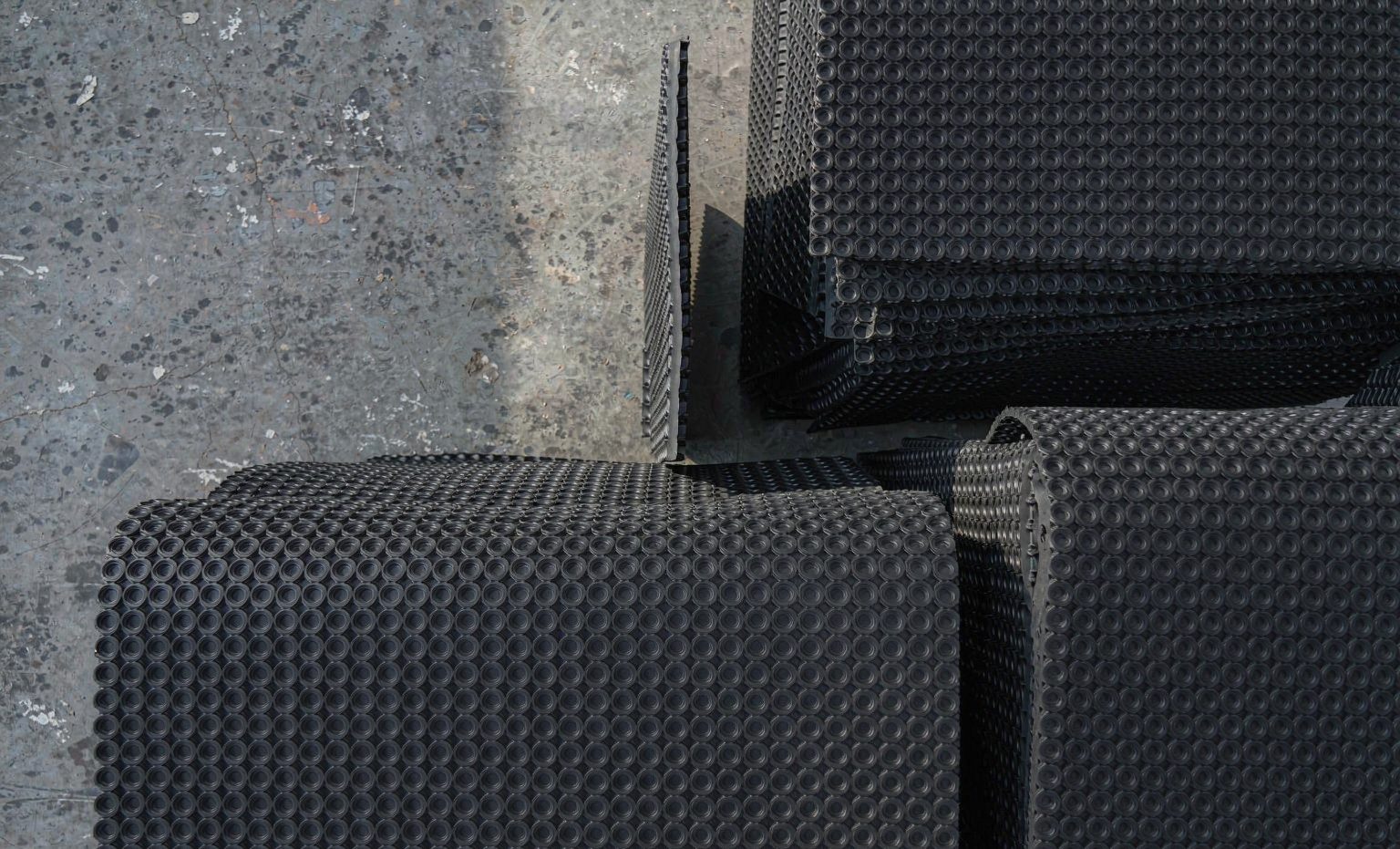
The underside and topside textures answer different problems. A coin or hammered topside grips hooves and disperses moisture; a broad-rib or studded topside moves liquids toward drainage. Flat undersides suit bedding packs; studded undersides let air move under the mat and dry the floor beneath. Match the texture to the zone, not the catalogue photo.
Thickness and construction by zone
| Zone | Recommended construction | Why |
|---|---|---|
| Cubicles / stalls | 17–25 mm vulcanised SBR, coin topside, flat or studded underside | Cushioning for lying time; underside pattern manages moisture under the mat |
| Walkways / alleys | Broad-rib topside, drainage channel | Traction in wet conditions; moves slurry toward scrapers or channels |
| Outdoor yards | EPDM compound, interlocking pavers | UV and ozone resistance; interlock covers large areas without adhesive |
| Milking parlour | NBR or sealed-surface SBR | Resists disinfectant washdowns and feed fats; easy to hose clean |
| Calf pens | Softer compound, fine texture | Young animals need grip without abrasion; warmth matters more than impact |
Typical minimum orders: 500 pieces for interlocking pavers, 100 m² for finished mats. Panel sizes cut to order.
The bedding saving is real — measure it
Incubation is not needed: the saving shows up in the first weeks. Mats reduce bedding consumption because animals lie longer and beds stay drier, and many dairy operations report cutting bedding use by half or more after matting stalls. The payback calculation is simple: (bedding saved per month) versus (mat cost ÷ expected years of service). Vulcanised mats in covered barns routinely serve 8–12 years.
Before ordering. Confirm the stall dimensions and whether mats must interlock, be loose-laid, or be nailed back. Interlocking pavers cover large yards without adhesive; loose-laid stall mats need a bevelled edge to prevent curling.